
I've been thinking a lot about optimism recently.
War. Climate change. Geopolitical instability. Shrinking aid budgets. A world that seems increasingly divided.
If you work in international development, there are plenty of reasons to feel a bit gloomy.
But I've found an unlikely source of inspiration.
Clarkson's Farm.
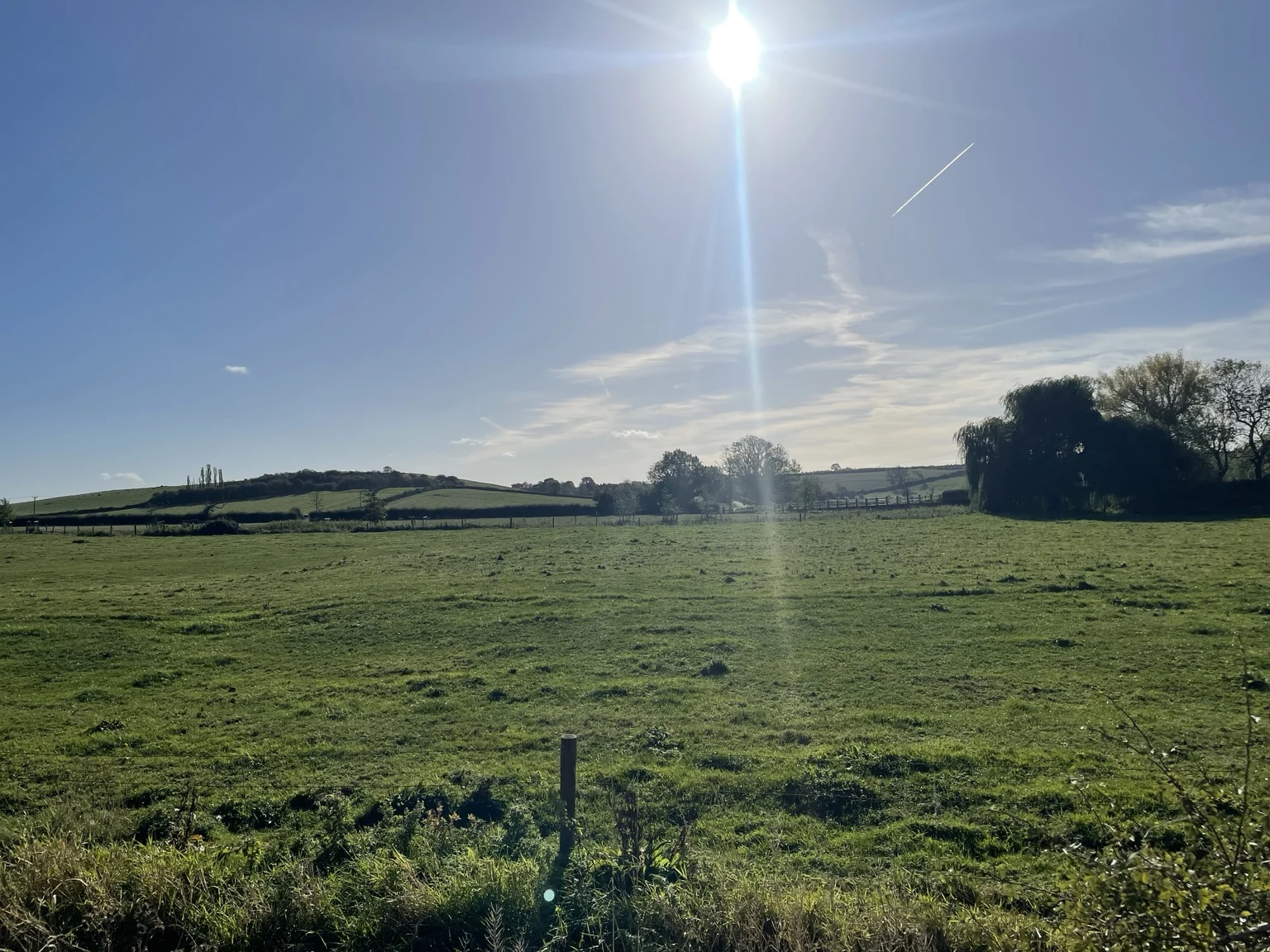
Living in rural Leicestershire, surrounded by farmland, I've always had an appreciation for the countryside. But watching Jeremy Clarkson and the team at Diddly Squat has given me a rather different perspective on the people who make their living from it (born from, I assume, how bloody hard farming is).
And something about the programme has really stuck with me.
Stoic optimism.
Think about it.
Farmers plant their crops knowing that an awful lot can go wrong.
Too much rain. Not enough rain. Disease. Rising costs. Falling prices. Government policy. And whatever else nature decides to throw at them.
They can do everything right and still have a terrible year.
And yet, when the next season comes around, they get up and do it all again.
Not because they're certain things will work out.
But because they believe it's worth trying.
I find that rather inspiring (even more so now with the effects of climate change, war and geopolitical instability driving up costs and uncertainty).
And I wonder whether international development could learn something from it.
We operate in a world where so much is beyond our control. Political instability, conflict, economic shocks, changing government priorities, funding cuts and increasingly severe climate impacts.
I've spent much of my career working on infrastructure and investment programmes where the ambition was enormous, but the practical business of getting things done could be painfully difficult.
Plans change. Funding disappears. Governments change direction. Projects stall.
And sometimes, after years of work, very little seems to have actually happened.
It's easy to become cynical.
But cynicism doesn't build roads, power stations or water systems. And it certainly doesn't improve people's lives.
That's not an argument for blind optimism.
Quite the opposite.
One of the things I like about Clarkson's Farm is that the optimism is grounded in the reality of how bloody difficult farming actually is.
Nobody pretends the challenges aren't there. They just keep trying to find a way through them.
And perhaps we need a little more of that in international development.
Because despite everything, there are good reasons to remain hopeful.
The global under-five mortality rate has fallen dramatically over the past three decades. Diseases that once killed enormous numbers of children are increasingly preventable. Millions of people have gained access to electricity, education and essential services.
Progress is real.
It's also uneven, fragile and nowhere near enough.
But it's worth remembering that things have changed for the better before, often in circumstances that seemed pretty hopeless at the time.
And that brings me back to the farmers.
They don't just hope for a good harvest.
They prepare the soil. Invest in equipment. Learn from their mistakes. Adapt to changing conditions. Make difficult decisions with imperfect information.
And then they get on with it.
I wonder whether we sometimes spend so much time in international development trying to design the perfect programme, build the perfect partnership or anticipate every possible risk that we forget the importance of simply making progress.
Not reckless progress. Not ignoring the evidence or abandoning our principles.
Just recognising that the world is messy, circumstances are rarely ideal, and waiting for everything to line up perfectly can mean waiting an awfully long time.
Perhaps that's what stoic optimism really means.
Accepting that much of what happens is beyond our control, while refusing to give up on the things we can influence.
So here's to a little more stoic optimism.
A little less despair about everything that's going wrong.
And a little more determination to do something about it.
After all, farmers don't wait for perfect weather before planting the next crop.
And perhaps we shouldn't wait for the world to settle down before trying to make it better.